Basket Reed or Willow for Your First Weaving Project
Basket reed or willow: choose the right first weaving material by matching its handling and finish to a simple project, with clear checks before you buy.
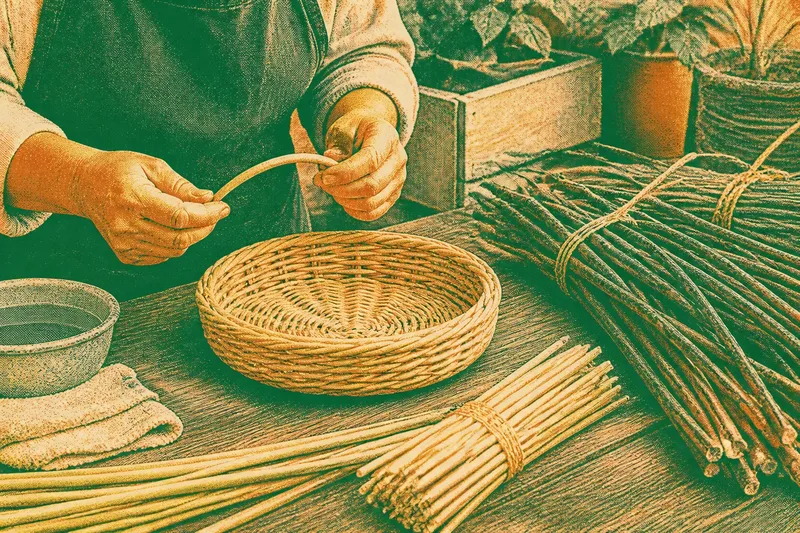
The most common first-basket mistake is buying material for a shape before checking how it bends; the result can be a project that kinks, splits, or fights your hands. For a first weave, choose basket reed or willow by the form you want and the way each material behaves in it.
A small, open piece keeps the choice focused. Reed suits an orderly surface, while willow makes the stems’ natural variation part of the design. Before buying, check the material itself, confirm its preparation needs, and make sure the project does not depend on tight corners or a fitted lid.
Match the project shape to the material
Think about the object’s outline and finish before choosing strands. A flat coaster or shallow tray is easier to manage than a deep basket because it involves less shaping. Reed often suits a compact, even pattern; willow is a good fit when you want visible rods and a softer outline.
Basket reed is sold in prepared strands, often with a regular width. Willow comes as natural rods that may taper, curve, or vary in thickness. Neither material is inherently better for a beginner: the useful question is whether its handling and appearance fit the object you have in mind.
- Check the project’s tightest bend; if it is sharp, choose a simpler outline or a material and design that allow a gentler curve.
- Check the desired surface; if you want repeated, even rows, choose reed, and if visible natural variation suits the piece, consider willow.
- Check the project instructions; if they call for a fitted lid, fine pattern, or handle, start with an open form instead.
- Check the supplier’s preparation directions; if they are unclear, ask before buying or preparing the full bundle.
- Check a sample strand or rod for damage; if it cracks, splits, or kinks during a gentle bend, set it aside and inspect another piece.
- Check whether you can buy a small quantity; if only a large bundle is available, ask a local basketry supplier or weaving group about a more suitable beginner amount.
Choose reed for a tidy, repeated pattern
Reed’s regular strands can make it easier to keep neighboring rows similar. That makes it a sensible option for a small coaster or shallow tray when you want the weave itself to look clear and orderly. Its consistency also makes uneven spacing easy to spot, so you can adjust the next strand as you work.
Preparation matters. Dry reed may resist a tight turn, while overly wet reed may feel limp or mark. Follow the supplier’s directions rather than relying on a single soaking routine, and keep unused strands covered while you weave. A shallow water dish and clean towel can help when the material instructions call for moisture.
If a strand resists the curve in your design, do not force it. Choose a gentler shape or prepare the material as directed, then check a small piece before continuing.
Choose willow for an outline that shows its natural character
Willow rods vary in shape and thickness, which can give a finished piece a less uniform, more expressive look. Before weaving, sort the rods by length and straightness. Straighter pieces may be easier to use where the structure needs to stay orderly; curved pieces can work in places where their shape suits the outline.
Willow also needs to bend without splitting or forming a hard kink. Prepare it according to the supplier’s instructions and test a sample gently. If it resists the curve, change the shape or ask a supplier or experienced weaver about preparation rather than forcing the rod.
Check the material before you buy?
Which material is easier for a beginner?
Reed is more regular from strand to strand, while willow asks you to account for differences between rods. Choose based on the project and the handling you prefer, not on a claim that one is always easier.
Can reed and willow go in the same project?
Some designs combine them, but differences in width, flexibility, and preparation can make a first weave harder to control. If you are learning, use one material at a time unless the project instructions explain how to combine them.
What tools should I set out?
Gather the material, a cutting tool suited to it, and a clean work surface. Add a water container or blunt tucking tool only if the preparation directions or project instructions call for one.
How can I tell whether a strand is ready to weave?
Follow the supplier’s preparation guidance, then gently bend a small sample in the direction your project requires. If it cracks, splits, or collapses, pause and ask the supplier or an experienced weaver before using the rest.
Work through a simple material choice
Say you want a shallow tray for seed packets on a potting bench. For this invented situation, assume the available reed is sold in a small bundle with clear preparation directions, and the available willow rods have several strong bends. First, decide that an open tray is more useful than a deep basket; next, compare the desired finish and choose a neat, repeated surface. Then check a reed strand after the supplier-directed preparation: if it bends gently without cracking, proceed with the reed tray; if it resists or splits, stop and ask the supplier before switching to the unprepared willow. The expected decision is clear: use the reed only if the sample suits the tray’s curves, or simplify the outline and seek advice if it does not.
For a first project, basket reed or willow is a practical choice only when the material matches the shape and its preparation is understood. Keep the outline open, inspect a sample before committing, and let the feel of the strand or rod settle the final decision.
Basket reed or willow is easier to choose when you compare the specific bundle in front of you rather than relying on a general rule. Keep an offcut beside the finished piece; it can remind you how that material bent and help you choose a suitable shape next time.